Plant-Based Doesn't Mean Clean: What's Actually Inside That Meatless Burger Patty
There's a quiet assumption baked into a lot of American grocery shopping right now — that anything labeled plant-based is automatically the healthier, cleaner choice. It shows up in the way these products are shelved (right next to the organic produce, often enough), in how they're marketed (earth tones, words like "crafted" and "nourishing"), and in the way people toss them into carts with a sense of virtuous satisfaction.
But here's the thing food science keeps nudging us toward: the word "plant-based" describes an origin, not a process. And the process, it turns out, matters enormously.
The Gap Between "Made From Plants" and "Minimally Processed"
When you pick up a conventional chicken breast — even a non-organic one — you're looking at an ingredient list that's essentially one item long. It's muscle tissue, maybe with a saline solution if it's been enhanced, but structurally it's a whole food. Your body knows what to do with it.
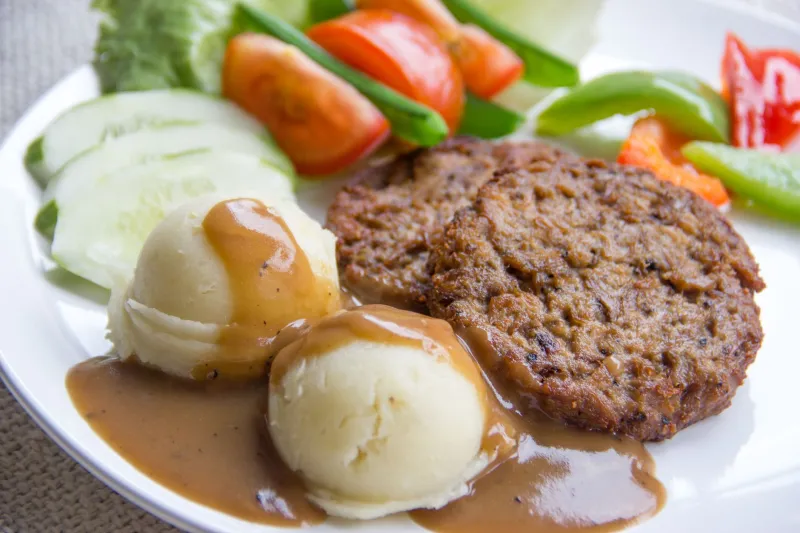
Now flip over a popular plant-based burger patty. You might find water, pea protein isolate, expeller-pressed canola oil, refined coconut oil, rice protein, natural flavors, cocoa butter, methylcellulose, potato starch, apple extract, pomegranate fruit powder, potassium chloride, and a handful of other stabilizers and binders — all engineered to approximate the sensory experience of beef.
None of those individual ingredients are necessarily toxic. But the sheer complexity of the formulation, and the industrial processes required to achieve it, puts these products firmly in the ultra-processed category — what food researchers classify as NOVA Group 4 foods. That's the same classification as fast food and packaged snacks.
Why "Isolate" Should Raise an Eyebrow
Pea protein isolate is the backbone of most major meat alternatives on the market right now. It sounds wholesome — peas are great! — but isolate production is a long way from anything you'd do in your kitchen. The process typically involves soaking dried peas, separating the protein through a series of acid and alkaline washes, and then spray-drying the result into a powder. What you end up with is a highly concentrated protein fraction stripped of most of the fiber, vitamins, and phytonutrients that made the original pea worth eating.
The same logic applies to soy protein isolate, rice protein concentrate, and wheat gluten (vital wheat gluten is essentially pure gluten, separated from the rest of the wheat grain). These are functional ingredients — they do a job in the product — but calling them "whole food" protein sources is a stretch.
By contrast, eating actual lentils, black beans, tempeh, or edamame delivers protein alongside fiber, folate, iron, and a spectrum of plant compounds that interact with your gut microbiome in ways isolated fractions simply can't replicate.
The Flavor Problem (And What They Use to Solve It)
Here's one of the less-discussed realities of plant-based meat manufacturing: plants, on their own, don't taste like a burger. Achieving that savory, umami-forward, slightly fatty flavor profile requires serious flavor engineering. "Natural flavors" is the catch-all phrase that gets used on labels, but that term is legally broad enough to cover hundreds of different compounds derived from both plant and animal sources — you often have no way of knowing exactly what's in there.
Sodium levels in many plant-based products also run surprisingly high, sometimes exceeding 400–500mg per serving, which rivals or surpasses many fast food options. That sodium isn't there for your health — it's there because salt is one of the oldest and most effective flavor enhancers we have, and it helps mask the off-notes that come with heavily processed plant proteins.
Whole Food Plant Proteins: The Comparison That Gets Ignored
The marketing conversation around plant-based meat tends to set up a binary: conventional meat on one side, meatless alternatives on the other. What gets left out of that framing is a third option that's been sitting there all along — whole food plant proteins.
A cup of cooked lentils gives you roughly 18 grams of protein, nearly 16 grams of fiber, significant amounts of folate and iron, and a total ingredient list of one item. Tempeh — fermented whole soybeans — delivers around 20 grams of protein per serving, plus probiotics and isoflavones. Canned chickpeas, black beans, hemp seeds, and edamame all offer protein in a matrix of complementary nutrients that your body is genuinely well-equipped to process.
These aren't exciting new products. They don't have sleek packaging or celebrity investors. But from a nutritional standpoint, they're doing something that no amount of food engineering has fully replicated: delivering protein the way nature packaged it.
When Plant-Based Alternatives Actually Make Sense
This isn't an argument for abandoning plant-based products entirely. There are real, legitimate use cases. For someone transitioning away from heavy meat consumption, a familiar burger-like experience can be a meaningful bridge. For households trying to reduce their environmental footprint without completely overhauling their cooking habits, these products offer genuine convenience. And for people with specific dietary restrictions, they can fill a gap.
The issue isn't the existence of these products — it's the halo effect that surrounds them. When "plant-based" becomes shorthand for "clean" or "healthy," consumers stop reading labels and start making assumptions. And that's exactly the kind of gap that clever marketing is designed to slip through.
How to Actually Read the Label
If you're going to buy processed plant-based products occasionally, here's a practical framework for making a more informed choice:
Count the ingredients. Fewer is generally better. If the list runs more than ten items, you're firmly in ultra-processed territory.
Watch the sodium. Anything above 400mg per serving deserves a second look, especially if you're eating it regularly.
Look at fiber content. One of the genuine advantages of plant protein is dietary fiber. If a plant-based product has little to no fiber, it's been processed to the point where that advantage is mostly gone.
Distinguish between protein sources. Whole soy (tofu, tempeh, edamame) behaves differently in your body than soy protein isolate. The closer to the original food, the better.
Question "natural flavors." It's not a red flag on its own, but it's a reminder that you don't have full visibility into the flavor system being used.
The Bigger Picture
Fresh thinking about food means resisting the easy categories. "Plant-based" isn't a synonym for healthy, just as "animal protein" isn't automatically a nutritional villain. The most useful lens is one that asks: how close is this food to the way it grew? How many steps did it take to get from field to package? What did the processing add, and what did it take away?
At Freska Plus, we think the best eating decisions come from understanding what's actually in your food — not just the front-of-package story, but the full picture. Whether that leads you toward a beautifully seasoned piece of salmon, a bowl of spiced lentils, or the occasional plant-based patty on a busy weeknight, the goal is the same: eat with your eyes open.