What the Heat Is Doing to Your 'Healthy' Food Before It Even Reaches Your Cart
Let's say you grab a bottle of cold-pressed juice, a bag of "superfood" dried kale chips, or a carton of organic milk on your next grocery run. You're making a conscious choice. You've read the labels, you've done the mental math, and you're willing to pay a little more because you believe you're getting something genuinely better for your body.
But here's an uncomfortable question worth sitting with: what if the processing that food went through before it landed on that shelf already stripped out a significant chunk of what made it worth buying in the first place?
Temperature is one of the most powerful — and most overlooked — forces in food nutrition. And the way conventional food manufacturing uses heat can quietly hollow out the very nutrients you're shopping for.
The Moment Heat Becomes the Enemy
Nutrients are not indestructible. Many vitamins, enzymes, and phytonutrients are structurally fragile. They evolved inside living plants and animals, not inside industrial processing lines running at temperatures designed to maximize shelf life and minimize bacterial risk.
Vitamin C is a classic example. It's water-soluble and notoriously heat-sensitive — exposure to temperatures above 86°F begins degrading it, and by the time you hit the 212°F range of conventional pasteurization, losses can reach 25 to 50 percent depending on duration. B vitamins, particularly B1 (thiamine) and B9 (folate), follow a similar pattern. Folate losses in heat-processed vegetables can range from 30 to 70 percent. That's not a rounding error — that's most of what you came for.
Then there are enzymes. Raw, minimally processed foods carry naturally occurring enzymes that support digestion and bioavailability. Heat above roughly 118°F begins denaturing them. Once denatured, they don't function the same way in your body. You're still consuming the food — you're just not getting the full biological conversation that whole, living food initiates.
And polyphenols — those celebrated antioxidant compounds found in berries, leafy greens, and olive oil — are similarly vulnerable. Some are relatively heat-stable, but others degrade meaningfully under prolonged high-heat exposure, which is exactly what ultra-processing delivers.
Pasteurization: Necessary, But Not Neutral
Pasteurization is not the villain here — let's be clear about that. It's a genuinely important public health tool that has prevented enormous amounts of foodborne illness. But it's also not a neutral act, nutritionally speaking.
Conventional high-temperature short-time (HTST) pasteurization heats liquid to around 161°F for 15 seconds. Ultra-high temperature (UHT) processing — the method behind those shelf-stable milk cartons — pushes temperatures to 280°F or above. The tradeoff for that extended shelf life is measurable: UHT milk shows notable reductions in certain B vitamins and some research suggests altered protein digestibility compared to minimally processed alternatives.
Organic milk processed at UHT temperatures is still organic. The cows still grazed on better pasture. But you may be getting a nutritionally different product than you'd expect from the premium price tag — and from the marketing.
The Dried Food Deception
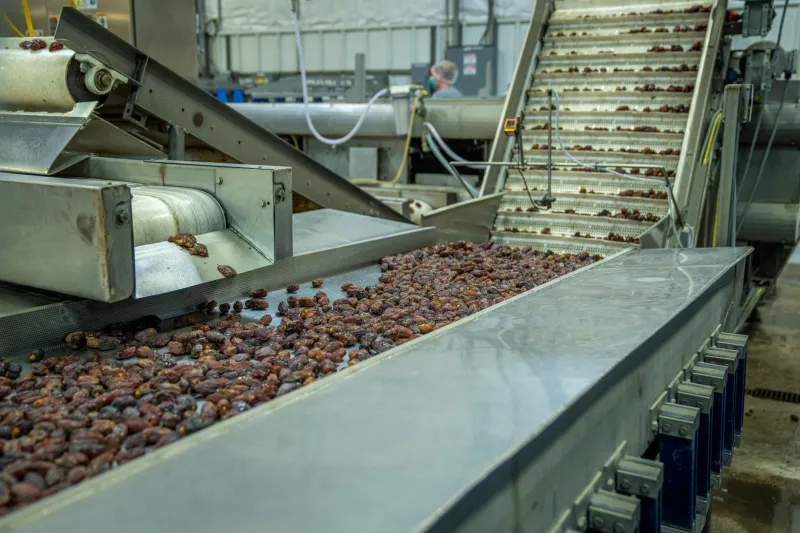
High-heat drying is another place where the gap between perception and reality gets wide. Commercially dried fruits, vegetables, and herbs are often processed at temperatures that compromise heat-sensitive nutrients substantially. That bag of "antioxidant-rich" dried blueberries? Depending on how they were dried, you may be getting a fraction of the anthocyanins present in the fresh berry.
Freeze-drying is a different story. It's a cold-process method that removes moisture through sublimation — converting ice directly to vapor without liquid heat exposure. The result is a product that retains significantly more of the original nutrient profile, often 90 percent or more of vitamins compared to heat-dried equivalents. It's why freeze-dried produce has quietly become a staple in serious nutrition circles. Yes, it costs more to produce. But that price premium actually reflects something real.
Ultra-Processing: Where Nutrients Go to Die
If pasteurization is a necessary compromise, ultra-processing is a whole different category of concern. The NOVA classification system, developed by researchers at the University of São Paulo and widely used in nutritional epidemiology, defines ultra-processed foods as industrial formulations containing ingredients rarely used in home cooking — emulsifiers, artificial flavors, modified starches, hydrogenated fats — and assembled through processes that have no domestic equivalent.
These foods typically undergo multiple rounds of high-heat treatment. What begins as a real ingredient — a grain, a legume, a vegetable — gets extruded, dried, flavored, and reconstituted into something that bears little nutritional resemblance to its origin. The fiber may technically still be present. The macros might check out on paper. But the micronutrient landscape, the enzyme activity, the polyphenol complexity — often gone.
And yet, a huge portion of what gets marketed as "healthy" in American grocery stores falls squarely into ultra-processed territory. Protein bars. Fortified cereals. "Veggie" snack crisps. The label says nutritious. The processing history tells a different story.
Cold Processing and the Emerging Alternative
The good news is that food technology is evolving in genuinely interesting directions. High-pressure processing (HPP) — sometimes called cold pressure or high-pressure pasteurization — uses intense hydraulic pressure rather than heat to neutralize pathogens. The result is a food-safe product that retains far more of its original enzyme activity, vitamin content, and flavor complexity. You've probably seen HPP-labeled cold-pressed juices at Whole Foods or Sprouts. That's not just marketing language — it reflects a meaningfully different process.
Similarly, cold-chain logistics and low-temperature dehydration methods are becoming more accessible as consumer demand for genuinely nutrient-dense products grows. Small-batch producers and regional food brands are increasingly investing in these methods precisely because their customer base is asking better questions.
How to Shop Smarter When Heat Is a Factor
You don't need a food science degree to make better choices here. A few practical filters can do a lot of the work:
Look for process transparency. Brands committed to nutrient preservation tend to talk about how their food is made — HPP, freeze-dried, raw, cold-pressed. If a label is vague about processing, that vagueness is usually telling.
Be skeptical of shelf-stable "superfoods." If something has a two-year shelf life and claims to be bursting with live nutrients, ask how that's possible. Stability and nutrient density are often in tension.
Prioritize fresh and frozen over dried and packaged when the nutrient content is what you're after. Frozen vegetables, flash-frozen at peak ripeness, frequently outperform their shelf-stable counterparts in vitamin retention.
Consider local and minimally handled produce. The shorter the journey from farm to table, the fewer processing steps involved — and the less opportunity for heat and time to do their damage.
The Real Cost of Cheap Processing
Here's the bottom line: not all premium pricing is justified, but some of it genuinely is. When a cold-processed juice costs three times more than a shelf-stable version, part of what you're paying for is a process that actually preserved what the marketing promised. When a freeze-dried berry powder costs more than its heat-dried equivalent, the price gap reflects real nutritional retention.
The food industry has gotten very good at using health language while quietly leaning on the cheapest, most shelf-life-friendly processing methods available. Eating fresh and living well means learning to read between those lines — and understanding that temperature, not just ingredients, shapes what your body actually receives.
Your food's story doesn't start at the label. It starts at the processing line. And what happens there matters more than most of us have been told.